
Hart County Arrest Log Sources
Hart County publishes no official sheriff blotter or city police blotter. No multi-day jail archive exists online either. The sheriff's site sticks to services, contacts, and tip lines. It lists no arrest ledger for the public. The county does link an official jail website. That domain blocks public visits with an HTTP 403 response, so any date-range or history tools stay hidden. Honest labeling matters here. Call it reported bookings and arrest coverage for a stated date range, not every arrest this week.
The best multi-day trail layers four record sets. The Hart County Jailer documents who was booked and held. Police write up the incident itself. Hart Circuit Court filings track how a case moves. Dated publications, such as weekly articles and legal notices, preserve what an outlet printed, often well after the arrest.
Any bounded log needs start and end dates. It should say whether those dates mark events or publications. Hart's sources support no fixed 72-hour or seven-day official window. Promise no rolling period.
Read Hart County Arrest Reports
Start from a known date, agency, or court reference. Then work backward through the coverage. Watch for duplicates. A newspaper summary, an aggregator entry, and a court case may all describe one arrest, not three, and their dates can reflect different publication stages.
- Define a date range and record whether it refers to arrest, booking, publication, or court filing.
- Ask Hart County Jail at 270-524-2571 about booking records and the current custodian for a written request.
- Contact the named arresting agency for its report. Use the sheriff, Munfordville Police, Horse Cave Police, or Kentucky State Police as the facts require.
- Search the Hart County News-Herald archive and Kentucky public notices by issue date and retain the publication source.
- Use the Hart Circuit Court Clerk or CourtNet to follow the filed charge to its later disposition.
For a fresh event still in intake, the Hart County 24 Hour Arrests page handles same-day confirmation. The multi-day log serves a different job. It tracks delayed publication, source comparison, and archive requests.
Hart Arrest Log Field Map
A good Hart County log entry keeps fields separate. Headlines blur details. Sources vary in what they display, and no public official interface shows this full set.
| Field | How to read it |
|---|---|
| Name and aliases | Confirm spelling with an official record, especially when several people share a name. |
| Arrest date and place | The police action and jurisdiction, which may differ from booking location. |
| Booking date and facility | The jail intake event, potentially later than the arrest. |
| Agency | The sheriff, city police, KSP, probation, transport, or another named office. |
| Charge or warrant | An charge at that stage; confirm exact language and issuing county. |
| Bond and custody | A time-sensitive status that may change after court review or release. |
| Case and disposition | The court trail, including possible amendment, dismissal, plea, acquittal, or judgment. |
| Photo availability | A source-specific fact. No fixed Hart official publication policy was verified. |
Always save the source URL and the retrieval date. Booking records change as cases move.
Hart Weekend Posting Gaps
No Hart source promises weekend or holiday updates. A cluster of Monday posts may simply reflect delayed entry or a weekly publication cycle. It rarely signals a surge in arrests. Keep arrest time, booking time, and publication time distinct. Office calls get answered during posted business hours, even though jail operations never pause.
The sheriff's public contact page lists weekday office hours. Custody questions go to the jail. Court entries appear on their own schedule. A multi-day view gives those systems time to catch up, though it still cannot prove completeness. Use the county booking-record paths when a named record needs official confirmation.
Hart Arrest Archives and Retention
The News-Herald archive works as a weekly issue viewer. A login or subscription may apply, though the Kentucky public-notice search can surface dated Hart legal notices and sheriff reports:
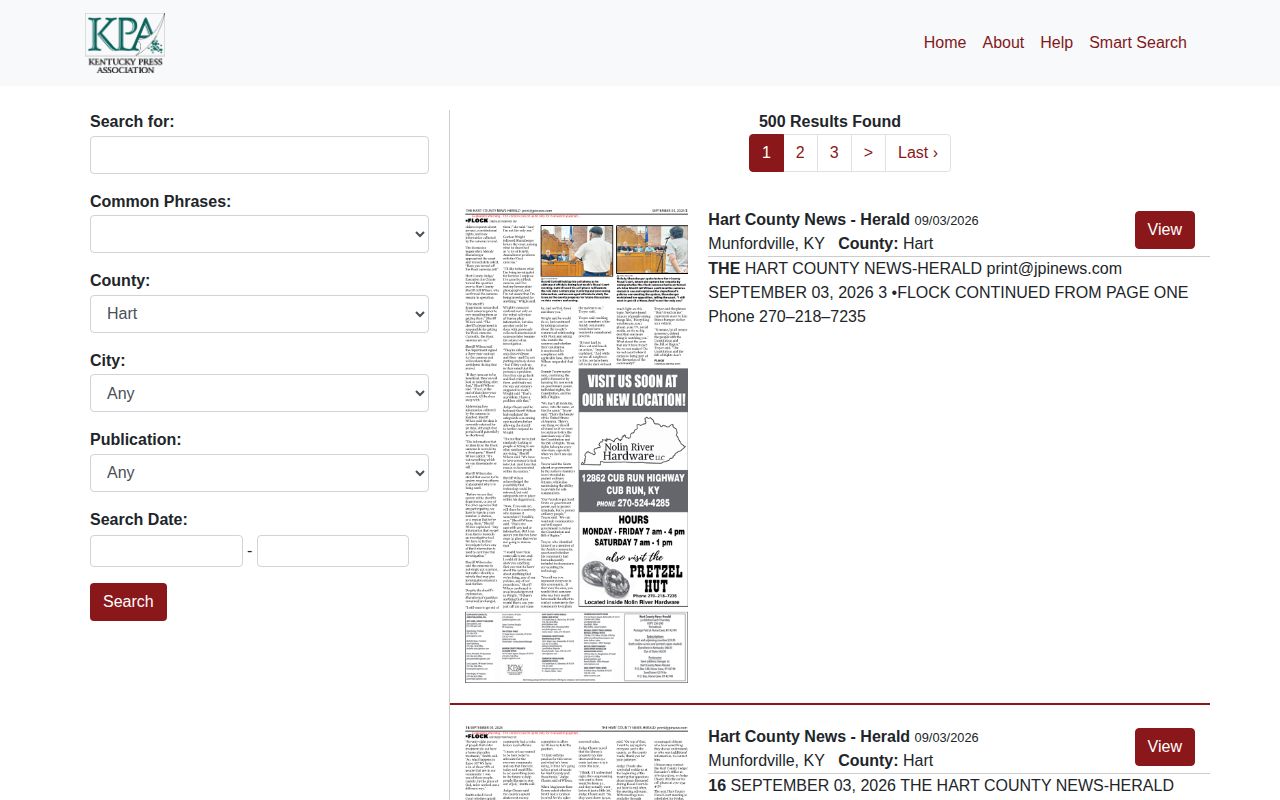
A legal notice is not a booking ledger. One dated Hart notice carried a sheriff report about warrants and people lodged in the detention center. Useful, but narrow. It lacked the breadth, cadence, and status fields of a live jail system. A saved search preserves it after a status changes.
Kentucky's retention schedule treats two jail series differently. An inmate record file may hold photographs and custody documents under one rule. A generic booking series follows another. Name the record and its approximate date, then ask the Hart jail which series applies. Retention never guarantees online access, and a deleted page does not mean the file was destroyed.
Hart Arrest News Trail
The Hart County News-Herald archive shows the local weekly access route:
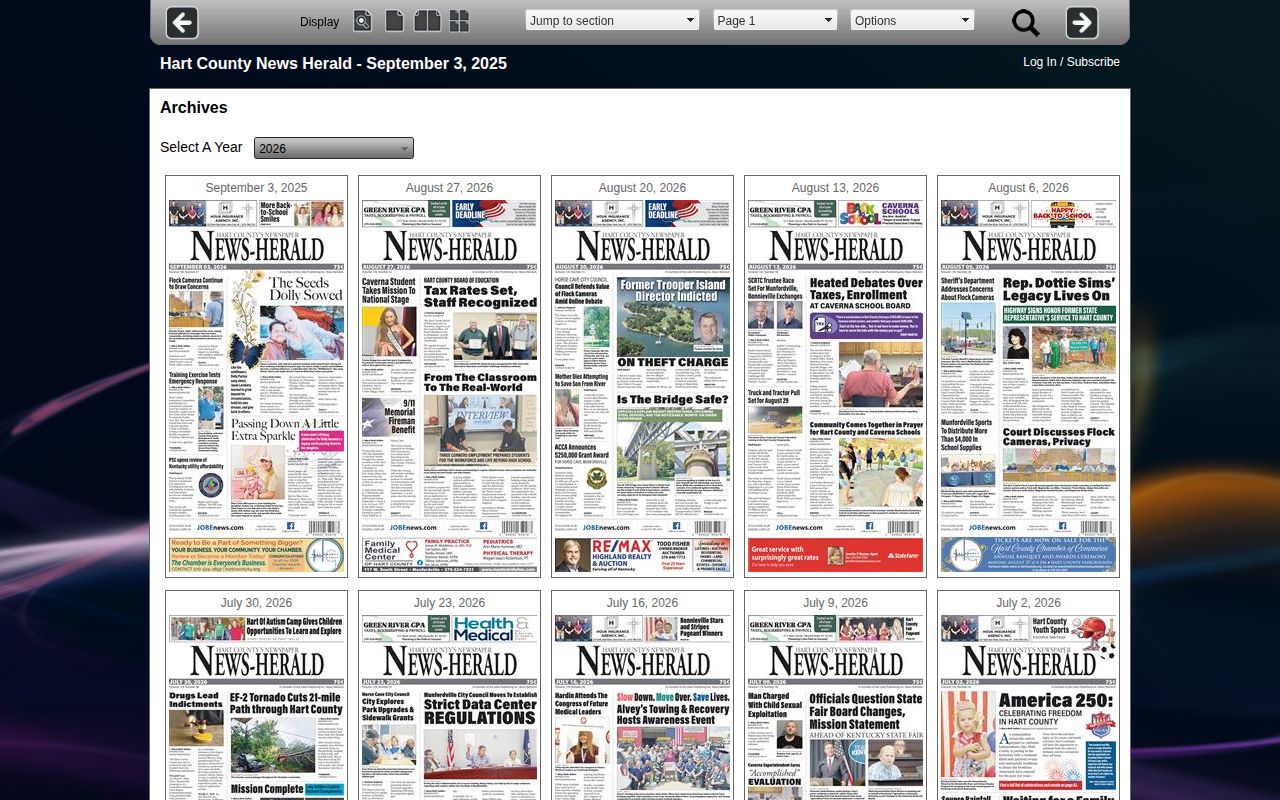
Weekly papers in Hart County still print sheriff summaries and public-safety items, though their timing and selection are editorial choices. WBKO, WDRB, WNKY, and WLOC add episodic Hart arrest coverage of their own. None runs a daily booking roster. A WBKO warrant story shows the limits. It covered several arrests tied to cross-county warrants yet noted that mugshots were not immediately available. Treat news as a first lead, not the last word. Pull the incident date and the agency from the story. Then confirm custody through the jail or VINE. The circuit clerk can settle case status. Headlines also tend to shorten charge language. Public notices deserve similar care. A notice may preserve a warrant summary or a lodging statement while dropping bond, booking time, release, and later court action. File it by its issue date, and never confuse that date with the day of the arrest.
Cross-County Warrant Log Details
A cross-county warrant entry needs structure. Issuing county, executing agency, arrest location, and booking facility each belong in separate fields. WBKO reported one 2025 Hart operation that way. Warrants came from Green County. Deputies executed them in Hart County. That story does not amount to a standing Hart most-wanted list. It shows why a county label alone hides where a warrant began and where the person was later held. Check warrant status through the Hart sheriff and the courts, and never confront or warn anyone over an online item. Call 911 for immediate safety concerns.
Hart Jail Reports Are Not Logs
Kentucky's Department of Corrections puts out weekly jail reports. These are oversight snapshots for Hart County and every other jail. One 2025 report gives Hart 97 beds. Population categories shift with each report date. That figure is capacity context, not a tally of arrests, bookings, or free beds. Older county planning material cited a different facility number. Keep every number tied to its date and source. Trend claims need the same discipline. A few news stories or a busy week of arrests cannot prove crime rose; a real trend takes a defined period, a consistent source, and one comparable measure.
Secondary Hart Arrest Indexes
Searches for Hart County arrests often surface unofficial pages. BustedNewspaper, RecentlyBooked, Mugshots.com, Arrests.org, and Mugshots.zone all run them. Expect long archives, filters, update claims, and copied charge or agency fields. None of it is primary. Entries sit stale, duplicated, or attached to the wrong county, and court outcomes rarely follow. Let the jail, the arresting agency, and the court lead every check. Kentucky law adds one boundary. KRS 61.8746 bars demanding payment to remove a publicly obtained booking photograph. It also creates a civil remedy. It does not order agencies to erase lawful records. Official correction, sealing, or expungement routes handle that, and none is a paid shortcut.
Public Record Search
Sponsored Results